



Phone:
+86-15978414719
Publish Time: 2026-06-02 Origin:https://www.hmaluminumsupply.com
7075 is not priced like common 3003, 5052, or 6061 material. It is a high-zinc, heat-treatable alloy used where strength-to-weight ratio matters more than the lowest mill cost. For large-volume procurement teams, the top concern is price volatility: base aluminum moves daily, alloying elements move separately, and aerospace-grade processing adds non-metal premiums.
The practical way to control the delivered cost is to separate the quotation into metal value, conversion cost, certification cost, logistics, and risk allowance. If these items are mixed into one number, negotiation becomes guesswork.
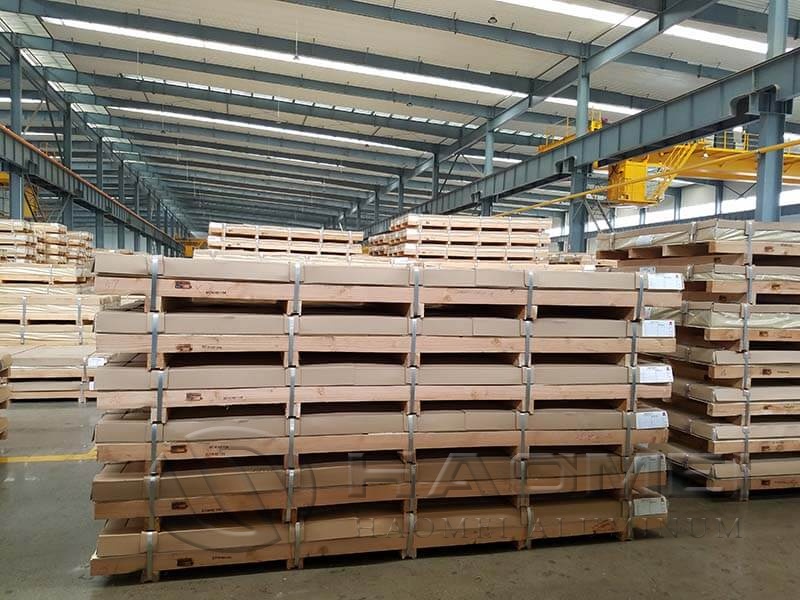
7075 belongs to the Al-Zn-Mg-Cu family. Under Aluminum Association and ASTM composition ranges, 7075 typically contains zinc 5.1-6.1%, magnesium 2.1-2.9%, copper 1.2-2.0%, and chromium 0.18-0.28%. These additions are much higher than in many commercial alloys, so the price is exposed to more than the LME aluminum price.
In T6 or T651 condition, 7075 offers very high strength. Published aerospace and engineering references commonly show 7075-T6 ultimate tensile strength around 570 MPa and yield strength around 500 MPa, depending on thickness and product form. That strength requires controlled casting, homogenization, hot rolling, solution heat treatment, quenching, stretching, and artificial aging.
For demanding programs, compare 7075 with Special aluminum materials when non-standard temper, width, tolerance, or inspection requirements are involved.
| Cost item | Why it affects 7075 pricing | Action for procurement teams |
|---|---|---|
| LME aluminum | Base metal benchmark is published daily by London Metal Exchange | Request pricing formula date and averaging period |
| Zinc, magnesium, copper | 7075 has high alloy content | Ask whether alloy surcharge is fixed or floating |
| Heat treatment | T6, T651, T7351 need controlled furnaces and quench systems | Confirm temper and mechanical property standard |
| Stress relief | T651 requires stretching after solution heat treatment | Specify residual stress requirement before quoting |
| Certification | EN 10204 3.1, mill test certificate, AMS compliance add cost | State documentation level before order placement |
| Surface and flatness | Plate for machining needs tight shape control | Define flatness, saw tolerance, and PE film protection |
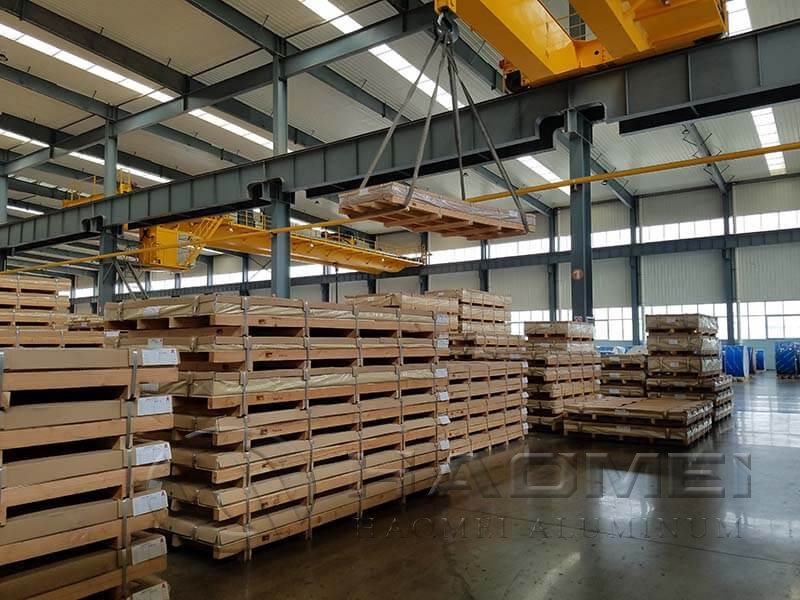
| Freight and packaging | Heavy plate needs moisture-proof, damage-resistant packing | Compare EXW, FOB, CIF, and DDP separately |
A transparent 7075 quotation should be auditable. Use this structure during RFQ review:
Delivered price = aluminum base + regional premium + alloy surcharge + conversion cost + temper/inspection cost + cutting/packing + freight + payment/finance cost
Do not compare two offers unless the same delivery term, temper, thickness, tolerance, and certificate level are used.
Alloy: 7075, not 7005, 7050, or 7475.
Temper: O, T6, T651, T73, or T7351 clearly stated.
Standard: ASTM B209 for aluminum flat rolled products, or AMS-QQ-A-250/12 where aerospace plate is required.
Certificate: chemical composition, mechanical properties, heat number, size, temper, and inspection result included.
Tolerance: thickness, width, length, diagonal, burr, and flatness defined.
Surface: mill finish, protected surface, or machining allowance confirmed.
Inspection: ultrasonic testing required or not required.
Packaging: seaworthy pallet, moisture barrier, edge protection, and coil eye direction if applicable.
Price validity: number of days and metal index date stated.
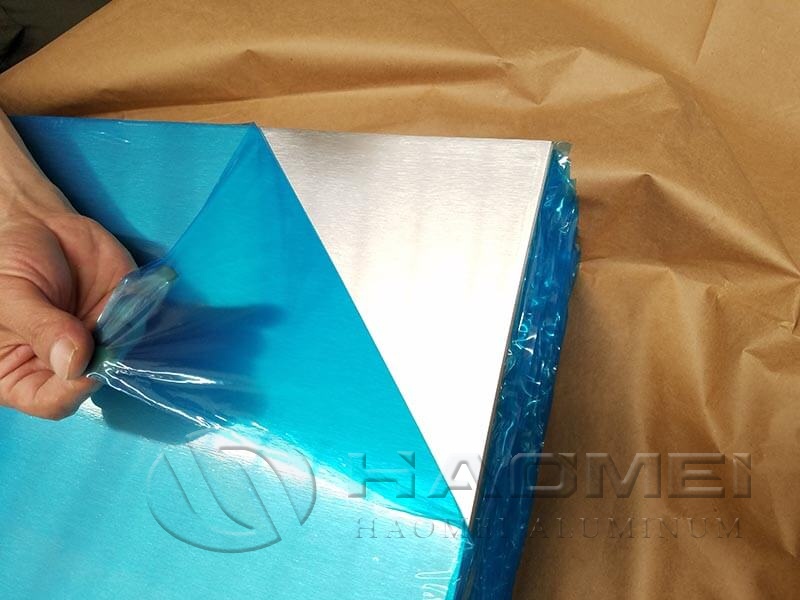
Where surface protection and custom flat plate packaging are critical, programs similar to Factory Customized Aluminium Aluminum Plain Flat Plate with PE Film One Side show the type of protective-film details that should be written into specifications.
7075 is most common in plate, bar, extrusions, and high-strength rolled products. It can be supplied as plate for aircraft fixtures, CNC structural parts, molds, defense components, bicycle parts, climbing equipment, and precision tooling. Thin rolled gauges exist, but 7075 is not the normal first choice for container foil, household foil, or deep-drawn discs circle because formability and corrosion resistance are more limited than 1xxx, 3xxx, 5xxx, or 8xxx alloys.
| Alloy | Strength level | Corrosion resistance | Formability | Typical cost position | Common use |
|---|---|---|---|---|---|
| 3003 | Low-medium | Good | Excellent | Low | Heat exchangers, general forming |
| 5052 | Medium | Very good | Good | Medium | Marine, electronics, cabinets |
| 6061-T6 | Medium-high | Good | Medium | Medium | General machining, frames |
| 7075-T6/T651 | Very high | Fair | Limited | High | Aerospace, high-load CNC parts |
| 7050-T7451 | Very high | Better stress-corrosion performance than 7075 in thick sections | Limited | Very high | Aircraft structural plate |
For aerospace or defense work, 7075-T651 may not be enough if stress-corrosion cracking resistance is the governing requirement. T73 or T7351 can improve resistance but normally reduces peak strength versus T6. That trade-off must be decided by the drawing, not by price alone.
7075 pricing usually rises when several signals appear together:
LME aluminum trends upward for several weeks.
Zinc or copper surcharges increase.
Aerospace demand improves, reducing available heat-treatment capacity.
Energy costs rise in major rolling regions.
Freight rates increase on Asia-Europe or trans-Pacific routes.
Mills extend lead times from normal weeks to several months.
Aluminum prices are publicly reported by LME, while U.S. Midwest premiums are commonly assessed by market reporting agencies such as S&P Global Commodity Insights and Fastmarkets. These references are not the same as a mill quotation, but they help audit the metal portion of the offer.
Use these steps to reduce risk without weakening the specification:
Lock only the conversion cost if metal is highly volatile; float the LME component by an agreed average.
Split urgent and non-urgent quantities to avoid paying airfreight or expedited rolling charges on all volume.
Accept standard mill widths where possible; special widths increase trimming loss.
For CNC parts, compare plate plus machining allowance rather than nominal thickness only.
Request nesting or cut-to-size supply if scrap value is lower than cutting cost.
Avoid over-specifying aerospace documents for non-flight industrial parts.
Use 6061-T651 or 6082-T6 for moderate-load parts when the drawing allows substitution.
Use 7050-T7451 instead of 7075 where thick-section stress-corrosion performance is mandatory.
Mill test certificate with heat number.
Chemical composition report matching 7075 limits.
Mechanical property report for the ordered temper and thickness.
Dimensional inspection record if tight tolerance was quoted.
Heat-treatment traceability record for T6, T651, T73, or T7351.
Packing list showing bundle weight, piece count, and pallet number.
Certificate of origin when import duty or trade compliance affects landed cost.
With the development of dozens of years, we, Haomei Aluminum has solid base to provide clean aluminum material for the high-end applications including lithium-ion battery, lightweight automobile body, 3c products, aluminum brazing and other special uses.