



Phone:
+86-15978414719
Publish Time: 2026-05-27 Origin:https://www.hmaluminumsupply.com
Recent English Q&A discussions around 1000 Series Aluminum Properties usually focus on purity, softness, corrosion behavior, bending performance, and whether 1050, 1060, 1070, or 1100 is the right choice for production. For teams sourcing aluminum materials for packaging, electrical parts, cookware, insulation, lighting, decorative panels, stamping parts, and deep-drawn components, the questions below give practical answers without overcomplicating metallurgy.
| Grade | Typical aluminum content | Main advantage | Common use direction |
|---|---|---|---|
| 1050 | About 99.5% min. | High ductility and reflectivity | Signs, reflectors, chemical equipment |
| 1060 | About 99.6% min. | Excellent forming and conductivity | Electrical parts, bus bars, lamp parts |
| 1070 | About 99.7% min. | Higher purity and bright surface potential | Decorative use, reflectors, capacitors |
| 1100 | About 99.0% min. | Good balance of workability and availability | General fabrication, cookware, nameplates |
It is close to commercially pure aluminum, but not absolutely pure aluminum. The 1000 series contains at least 99.0% aluminum, with small amounts of iron, silicon, copper, and other residual elements depending on the grade. The higher the grade number in many common choices, such as 1060 and 1070, the higher the minimum aluminum content.
For purchasing decisions, purity affects three things most: conductivity, softness, and surface behavior. If electrical conductivity and soft forming are priorities, 1060 and 1070 often receive attention. If broad availability and general processing matter more, 1100 is frequently selected.
A simple way to think about it is this: 1050, 1060, 1070, and 1100 are not selected for high strength. They are selected because they are easy to form, resist atmospheric corrosion well, conduct heat and electricity efficiently, and can be supplied in many thicknesses and tempers.
Yes, if the application does not require structural strength. 1000 series aluminum is soft compared with 3003, 5052, 6061, and other alloy families. That softness is exactly why it performs well in stamping, spinning, rolling, bending, and deep drawing.
The temper matters as much as the grade. O temper is annealed and very soft, making it suitable for deep drawing and complex shaping. H14 is strain-hardened to a half-hard condition, offering better handling strength while still allowing moderate forming. H18 is much harder and less forgiving in tight bends.
| Temper | Relative hardness | Forming behavior | Typical selection reason |
|---|---|---|---|
| O | Very soft | Excellent for deep drawing | Maximum ductility |
| H12 | Soft to quarter-hard | Good bending and shaping | Light stiffness with formability |
| H14 | Half-hard | Moderate forming | Common balance for fabrication |
| H18 | Full-hard | Limited bending | Better flatness and handling rigidity |
| H24 | Strain-hardened and partly annealed | Better stability than O | Useful where shape control matters |
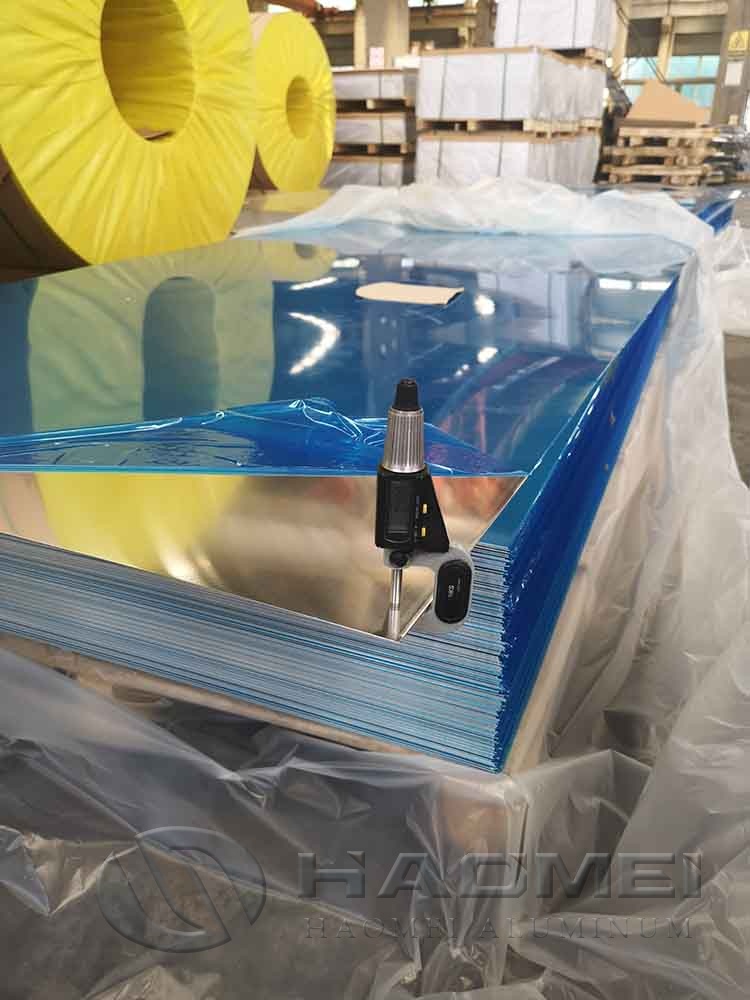
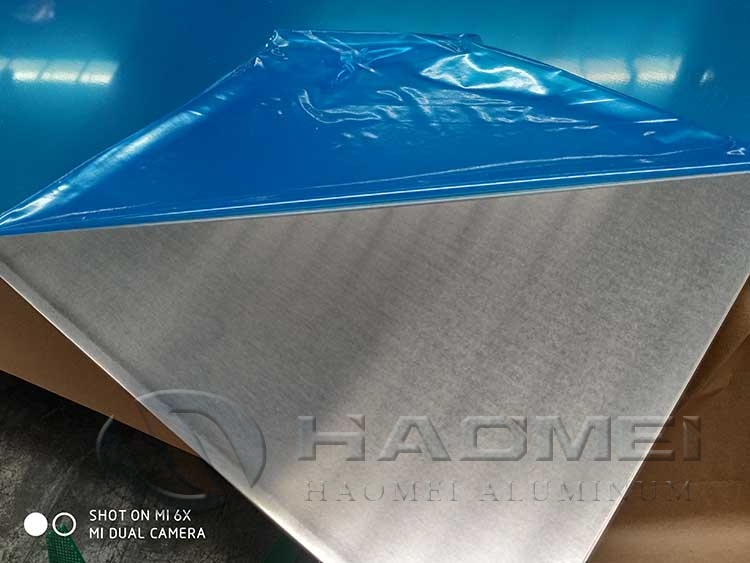
For plain protected flat stock, Factory Customized Aluminium Aluminum Plain Flat Plate with PE Film One Side can be considered when surface protection during handling and fabrication is important.
Aluminum does not rust in the way carbon steel rusts, because rust is iron oxide. 1000 series aluminum forms a thin oxide film on the surface, and that film helps protect the metal in normal indoor and mild outdoor environments.
However, corrosion resistance does not mean it can handle every environment. Strong alkaline cleaners, certain salts, acidic chemicals, and galvanic contact with dissimilar metals can damage the surface. If the part will be used near seawater, industrial fumes, cement, or aggressive cleaning agents, testing or surface treatment may be needed.
For food-adjacent, decorative, thermal, or packaging-related uses, 1000 series aluminum is often preferred because it is clean, workable, and naturally corrosion resistant under suitable conditions. When a brighter or more durable surface is needed, anodizing, polishing, brushing, or coating may be added.
The most practical properties are not limited to tensile strength. A purchasing specification should also consider chemical composition, temper, thickness tolerance, width tolerance, surface finish, flatness, packaging method, and intended fabrication process.
Typical property ranges vary by mill standard and temper, but the following table gives a useful comparison for discussion with a supplier.
| Property | 1000 series aluminum behavior | Why it matters in production |
|---|---|---|
| Density | About 2.71 g/cm3 | Lightweight design and freight planning |
| Electrical conductivity | High, often better than alloyed aluminum | Electrical and heat-transfer applications |
| Thermal conductivity | High | Cookware, heat exchangers, insulation parts |
| Strength | Low to moderate depending on temper | Not ideal for heavy structural loads |
| Ductility | Excellent, especially in O temper | Deep drawing, stamping, spinning |
| Weldability | Generally good | Fabricated tanks, covers, assemblies |
| Machinability | Fair to low | Soft material can stick to tools |
For very thin rolled material, 0.12mm Aluminum Rolled Metal Aluminum Sheet fits applications where gauge control, clean surface, and smooth winding are central requirements.
Choose 1000 series when you need excellent formability, high conductivity, good reflectivity, lower alloy content, and economical processing. Choose 3003 when you need better strength than commercially pure aluminum while keeping good formability. Choose 5052 when corrosion resistance and strength are more demanding, especially in marine or transportation-related environments.
| Material family | Strength level | Formability | Corrosion resistance | Common reason to select |
|---|---|---|---|---|
| 1000 series | Low | Excellent | Good in mild environments | Conductivity, softness, reflectivity |
| 3003 | Medium-low | Very good | Good | General fabrication with added strength |
| 5052 | Medium | Good | Very good | Stronger parts and harsher service |
If the part needs repeated bending, drawing, or spinning, 1000 series in O or H12 temper may be safer than a stronger alloy. If the part needs to hold shape under higher load, 3003 or 5052 may reduce deformation during service.
When requesting a quotation, it is helpful to provide grade, temper, thickness, width, length or inner diameter requirement, surface finish, protective film demand, tolerance standard, and end application. That information allows the supplier to recommend whether 1050, 1060, 1070, or 1100 is the most suitable grade, instead of quoting only by thickness and weight.
With the development of dozens of years, we, Haomei Aluminum has solid base to provide clean aluminum material for the high-end applications including lithium-ion battery, lightweight automobile body, 3c products, aluminum brazing and other special uses.