



Phone:
+86-15978414719
Publish Time: 2026-09-21 Origin:https://www.hmaluminumsupply.com
Aluminium foil jumbo roll manufacturers are often assessed on price and delivery time first. For converters, however, gauge consistency usually has the greatest effect on yield, rewinding stability, barrier performance, and finished-product quality.
A jumbo roll that varies excessively in thickness can create web breaks, uneven tension, poor lamination, inaccurate cutting, and material loss. This article provides a practical method for evaluating foil producers, controlling specifications, and comparing commercial offers without relying on vague product claims.
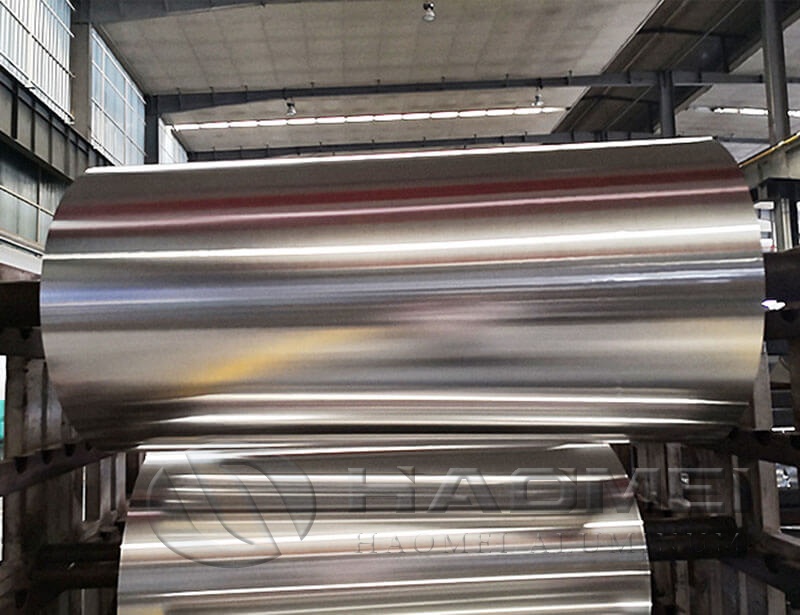
Foil thickness is commonly stated in microns, such as 6 μm, 7 μm, 9 μm, 12 μm, 18 μm, or 20 μm. The nominal figure alone is not enough. Actual thickness must remain within an agreed tolerance across the roll width and throughout the coil length.
For example, a 12 μm foil with poor cross-direction consistency may run like a lighter material at one edge and a heavier material at the other. This affects tension control during printing, coating, laminating, slitting, or embossing.
ISO 9001 certification can indicate that a supplier operates a quality-management system, but it does not define foil thickness tolerances. The purchase specification should state measurable acceptance criteria. EN 546-3 covers tolerances for aluminium and aluminium-alloy foil, while ASTM B479 addresses annealed aluminium and aluminium-alloy foil for flexible barrier, food-contact, and other applications.
| Control Point | Why It Affects Production | What to Request |
|---|---|---|
| Average thickness | Determines material consumption and performance | Thickness test report by roll |
| Cross-direction profile | Reduces edge-to-center variation | Gauge scan or profile data |
| Length-direction variation | Supports stable converting tension | Sampling method and results |
| Pinholes | Influences barrier properties | Pinhole count method and limit |
| Flatness and telescoping | Prevents rewinding and slitting issues | Coil appearance criteria |
| Surface cleanliness | Important for printing and lamination | Surface tension or wettability data |
A reliable producer should explain how thickness is measured, including instrument type, calibration status, sampling frequency, and whether measurements are taken before or after final annealing.
For thin foil, mass-per-unit-area testing can provide an additional verification method. Thickness may be calculated from mass, area, and aluminium density, approximately 2.70 g/cm³. This calculation should supplement, not replace, calibrated thickness measurement.
A clear specification prevents disputes caused by terms such as "standard quality" or "industrial grade." State the intended conversion process and finished application before requesting quotations.
Use the following checklist when comparing aluminium foil specifications:
| Item | Information to Define |
|---|---|
| Alloy | 1xxx series alloy designation, such as 1060, 1070, 1100, 1145, 1235, or 3003 where applicable |
| Temper | O, H18, H19, H22, or other required temper |
| Nominal thickness | Microns, plus agreed tolerance |
| Width | Finished width, width tolerance, and edge condition |
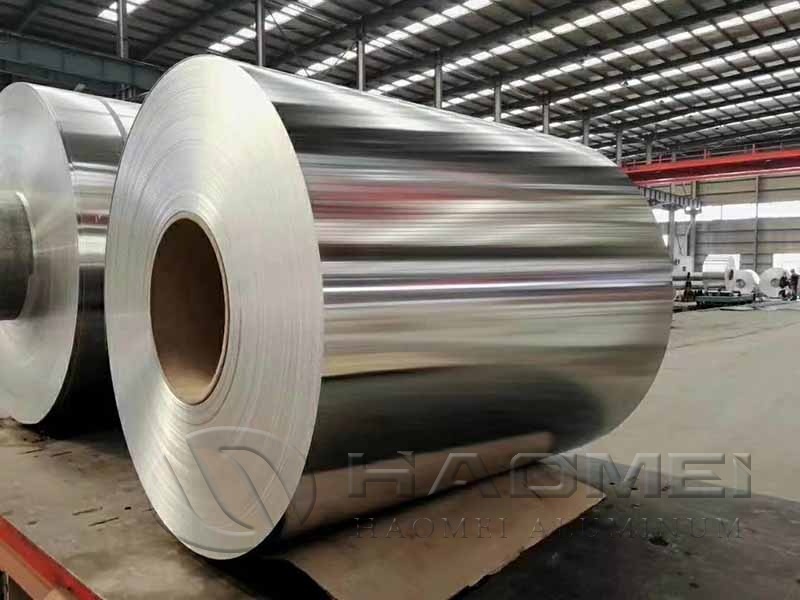
| Inner diameter | Core ID, commonly specified in millimetres |
| Outer diameter or roll weight | Maximum OD, net weight, and handling limit |
| Surface | Bright or matte side requirements, oil level, cleanliness, wettability |
| Mechanical properties | Tensile strength and elongation where relevant |
| Defects | Pinhole limit, edge wave, scratches, oil spots, splice policy |
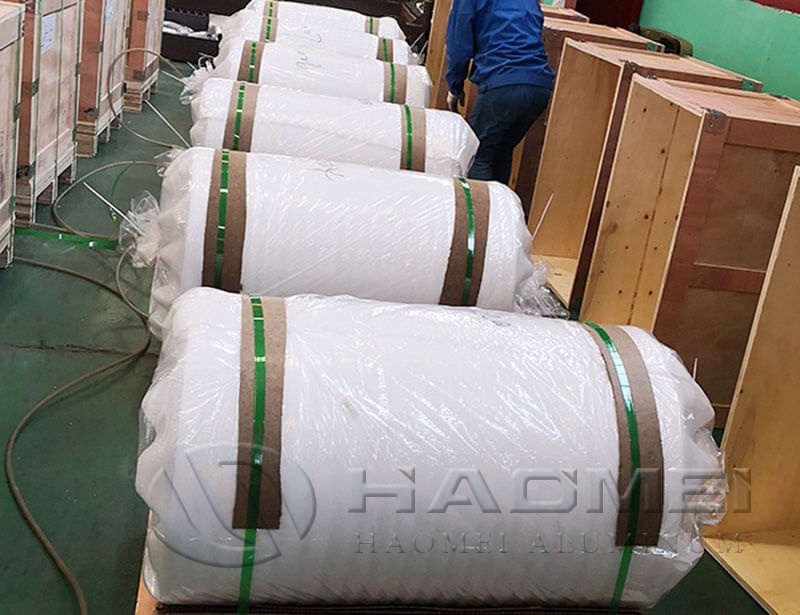
| Packaging | Moisture barrier, wooden pallet, suspension or eye-to-wall orientation |
| Documentation | Mill test certificate, packing list, certificate of origin if required |
For food packaging, ask whether the material is intended for direct food contact or for use within a multilayer structure. In the United States, food-contact compliance may involve U.S. FDA requirements, including applicable provisions in 21 CFR. In the EU, framework Regulation (EC) No 1935/2004 and good manufacturing practice Regulation (EC) No 2023/2006 are relevant. For laminates, inks, adhesives, coatings, and plastic layers may introduce separate compliance requirements.
Do not accept a generic "food grade" statement as sufficient evidence. Request a declaration of compliance that identifies the product, intended conditions of use, applicable regulatory basis, and responsible issuing company.
The most useful comparison is not unit price alone. Convert each offer into the same commercial basis: alloy, temper, thickness tolerance, width, net weight, packaging, delivery terms, payment terms, and testing scope.
A practical price structure is:
Final foil price = aluminium metal reference + conversion charge + alloy/quality premium + packaging + freight + applicable duties or taxes
The aluminium metal reference is often linked to London Metal Exchange pricing or another agreed market index. LME settlement prices change daily, so a quotation should state the reference date, pricing period, currency, premium basis, and whether freight is fixed or adjustable. A lower initial offer can become less competitive if it excludes export packaging, inspection, insurance, or destination charges.
| Evaluation Area | Evidence to Request | Warning Sign |
|---|---|---|
| Manufacturing capability | Equipment list, annual audit records, product range | Cannot explain rolling and annealing controls |
| Quality verification | Mill test certificate, gauge profile, pinhole report | Only provides a general brochure |
| Traceability | Coil number linked to production and test records | No lot-level identification |
| Packaging | Photos, packing specification, moisture protection method | Unprotected roll edges or unclear pallet design |
| Delivery reliability | Production lead time and shipment history | Delivery date stated without commercial terms |
| Claims handling | Written procedure for nonconforming material | No defined inspection window or remedy process |
Before placing a production order, evaluate a representative trial roll using the same thickness, width, alloy, temper, and packing method proposed for regular supply. Inspect the coil before loading it onto the converting line. Record net weight, width, core dimensions, visible edge defects, telescoping, and outer-wrap condition.
During conversion, monitor web breaks, tension stability, splice frequency, pinhole performance, coating adhesion, and slitting quality. Retain samples from both the leading and trailing ends of the roll. These records create an objective basis for future quality discussions.
A well-controlled foil source provides measurable tolerances, traceable test records, compliant documentation where required, and packaging that protects the roll until conversion. Prioritizing gauge consistency helps reduce downtime, scrap, and avoidable variation in finished aluminium packaging and industrial applications.
With the development of dozens of years, we, Haomei Aluminum has solid base to provide clean aluminum material for the high-end applications including lithium-ion battery, lightweight automobile body, 3c products, aluminum brazing and other special uses.