



Phone:
+86-15978414719
Publish Time: 2026-07-28 Origin:https://www.hmaluminumsupply.com
A 48 X 96 diamond plate is a nominal 4 ft × 8 ft aluminum tread product, equivalent to 1,219 mm × 2,438 mm. It is widely used for truck bodies, trailer floors, stair components, toolboxes, equipment guards, wall protection, and access platforms.
The highest-risk specification error is confusing overall thickness with base-metal thickness. Raised diamonds increase the measured thickness, but structural capacity, fastening selection, bending behavior, and weight calculations depend primarily on the base metal. State both values on the purchase order.
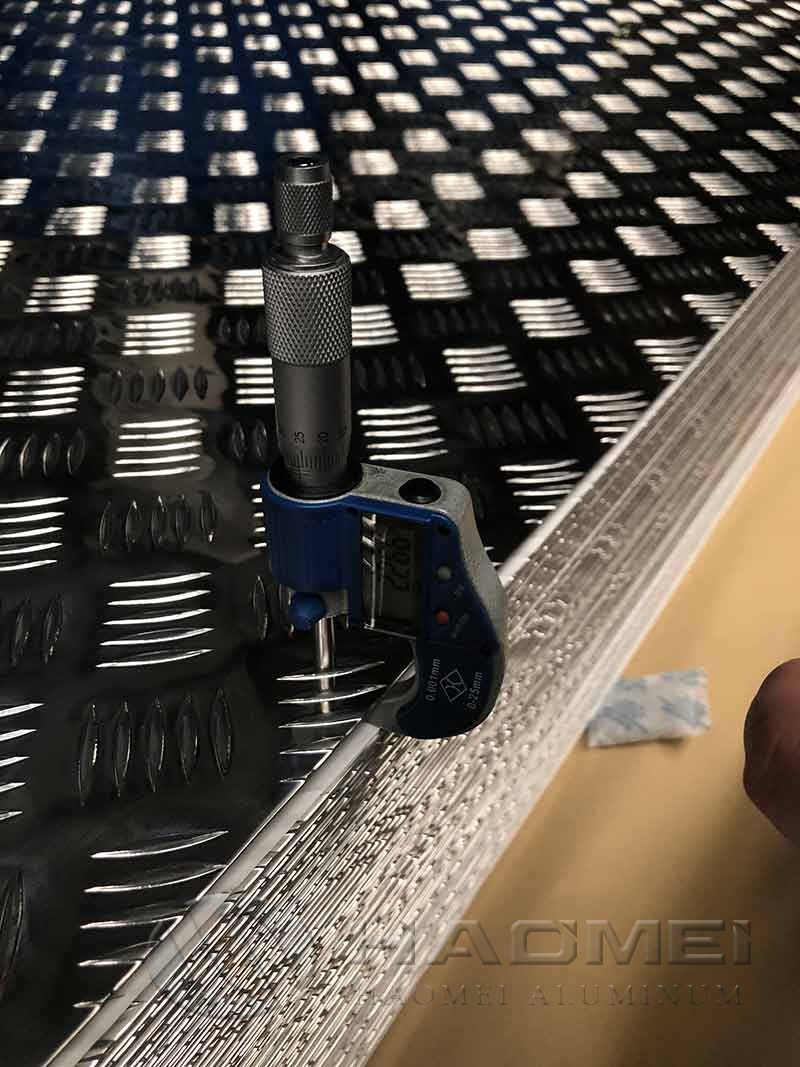
For most decorative and light-duty floor applications, 3003-H22 is the standard choice. Alloy 3003 is an aluminum-manganese alloy with good corrosion resistance and formability. The H22 temper provides strain-hardened strength while retaining practical fabrication characteristics.
For applications needing higher strength or improved marine corrosion performance, 5052 tread material may be considered. Availability, pattern options, and conversion cost can differ by mill and region. Do not substitute alloy or temper without written approval, especially where forming, welding, or load-bearing performance is controlled.
Top concern: Specify base thickness, not only the catalog thickness. A designation such as "1/8 in diamond plate" can be interpreted differently between suppliers. Require the base thickness, overall thickness, tolerances, and test method.
| Nominal panel size | Area | Common application | Specification action |
|---|---|---|---|
| 48 in × 96 in | 32 sq ft | Truck and trailer panels | Confirm cut-size tolerance and diagonal squareness |
| 48 in × 96 in | 2.97 m² | Platform or wall cladding | Define grain/pattern direction and protective film |
| 48 in × 96 in | 1.219 m × 2.438 m | Fabricated components | State whether corners must be square or radius-cut |
The following figures show flat-metal theoretical weights only. Actual tread plate mass is higher because of the raised pattern. Use the mill-certified mass per piece when freight, lifting, or structural loading is sensitive.
| Base thickness | Flat theoretical weight for 48 in × 96 in | Practical note |
|---|---|---|
| 0.063 in | 17.5 lb | Light trim, box covers, wall panels |
| 0.080 in | 22.2 lb | General-purpose protective panels |
| 0.100 in | 27.7 lb | Moderate-duty fabrication |
| 0.125 in | 34.6 lb | Heavy-duty covers and floor panels |
The calculation uses aluminum density of approximately 0.0986 lb/in³, consistent with published Aluminum Association engineering data. Calculate weight as length × width × base thickness × density, then apply the supplier's certified tread-pattern mass adjustment.
Raised tread improves grip under many dry conditions, but it is not automatically a certified slip-resistant surface. Oil, water, ice, footwear, slope, cleaning methods, and tread orientation change real performance. For workplace walking surfaces, evaluate the finished installation against the applicable local safety rules. In the United States, OSHA 29 CFR 1910.22 requires walking-working surfaces to be maintained in a clean, orderly, and sanitary condition.
Aluminum tread plate is generally produced from rolled aluminum, followed by embossing or rolling through patterned rolls, leveling, cutting, surface protection, and packing. The pattern must remain consistent across the panel; flattened diamonds, roller marks, edge damage, and residual bow can disrupt fabrication or visual appearance.
Use a written specification that identifies the applicable standard. ASTM B632 covers aluminum-alloy rolled tread plate. ASTM B209 is commonly referenced for aluminum and aluminum-alloy plate products. For European projects, EN 1386 covers aluminum and aluminum-alloy tread plate. Confirm the edition and contractual requirements before issuing an order.
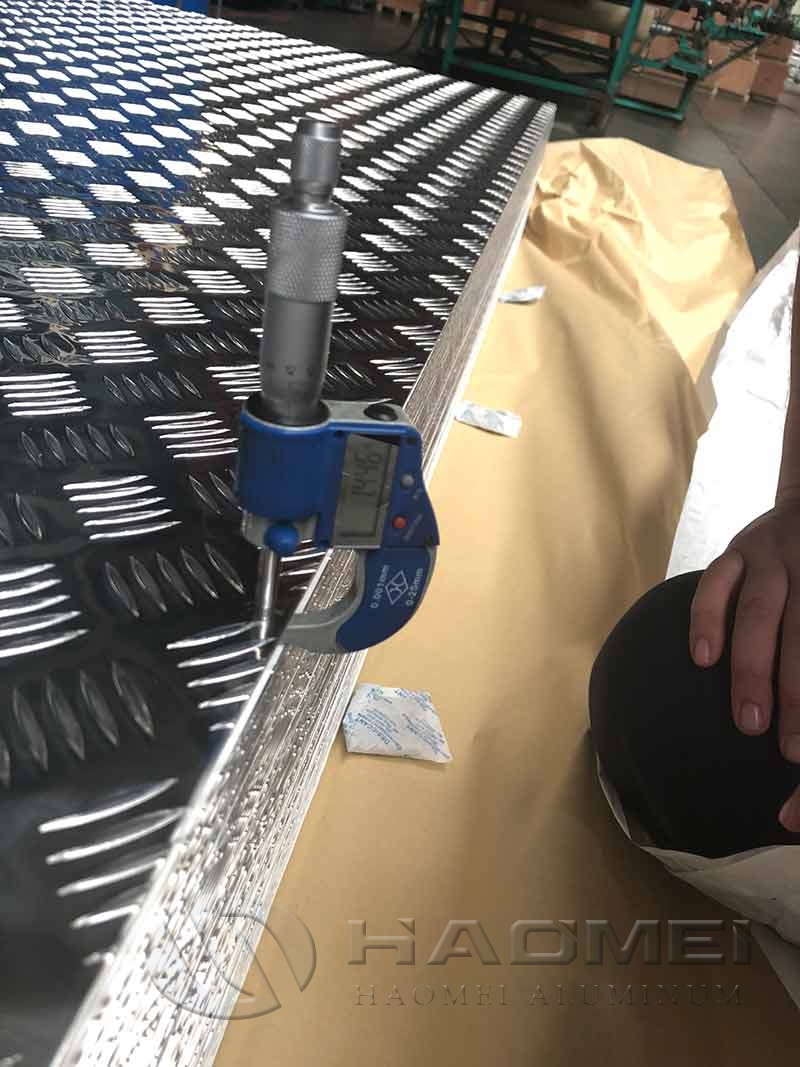
A workable purchase specification should include:
Alloy and temper: For example, 3003-H22, with no unauthorized substitution.
Dimensions: 48 in × 96 in, stated as cut size or nominal size, plus length, width, and diagonal tolerances.
Thickness definition: Minimum base thickness and maximum/minimum overall thickness after tread formation.
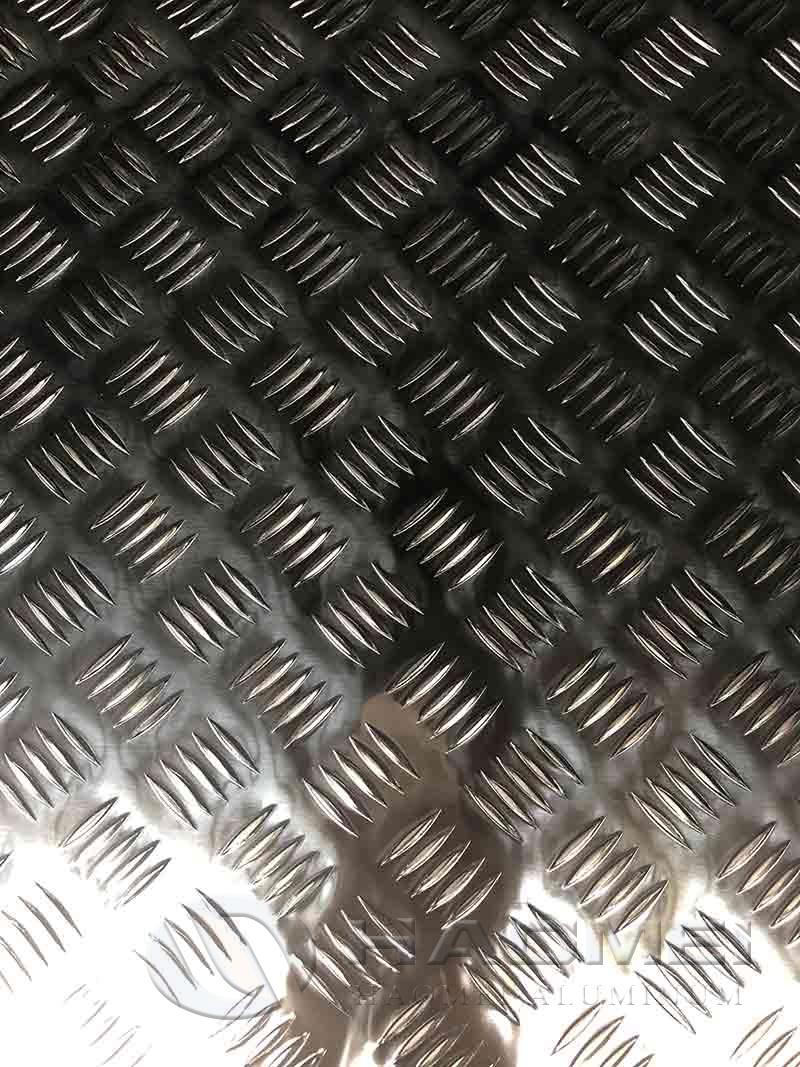
Pattern: Diamond configuration, orientation, pattern height requirement if needed, and acceptable visual variation.
Surface: Mill finish, bright finish, protective PVC film, allowable scratches, and film removal requirement.
Edges and flatness: Deburred edges, corner condition, allowable bow/camber, and squareness requirements.
Documentation: Certificate of conformance, mill test report where required, heat/lot traceability, and packing list.
Packing: Interleaving, moisture protection, skid design, maximum bundle weight, and fork-entry direction.
Do not use a generic "diamond plate" description for safety-critical fabrication. It does not define alloy, temper, base thickness, tread geometry, or compliance documentation.
The delivered cost is usually built from five components: regional aluminum benchmark, local premium, alloy conversion, tread rolling and cutting, and logistics. In North America, procurement teams commonly monitor the London Metal Exchange aluminum reference price and the Midwest Premium. Freight, protective film, export packing, import duties, and destination taxes can materially change the delivered figure.
A 4 ft × 8 ft format is broadly stocked in common 3003-H22 thicknesses, but lead time increases when an order requires special thickness, protective film on both sides, tight flatness, uncommon tread pattern, custom packaging, or certification review. Fabrication demand from trailers, transportation, construction, and industrial equipment can tighten availability during high-output periods.
Use this cost-control sequence:
| Step | Action | Risk prevented |
|---|---|---|
| 1 | Lock alloy, temper, base thickness, and pattern before requesting quotations | Apparent low price based on a lighter or different product |
| 2 | Request price per pound and price per panel | Hidden differences in actual panel mass |
| 3 | Confirm net weight, gross weight, and pieces per skid | Freight and handling variance |
| 4 | Set an aluminum-price validity period or index formula | Exposure to benchmark movement |
| 5 | Approve a first-article panel for appearance-sensitive projects | Pattern, finish, and film disputes |
| 6 | Define claims timing and inspection method | Delayed resolution of transit damage |
At receiving, inspect each pallet before cutting or fabrication. Photograph external packaging, verify the identification label against the packing list, measure length and width at multiple points, check base thickness with suitable equipment, and inspect pattern continuity under adequate lighting. Retain lot markings until the material has passed incoming inspection.
For long-term supply, compare suppliers on certified base thickness, alloy traceability, packaging quality, delivered-weight accuracy, and claim response rather than only panel price. This approach reduces rejected material, unplanned fabrication changes, freight surprises, and safety-related uncertainty in finished installations.
With the development of dozens of years, we, Haomei Aluminum has solid base to provide clean aluminum material for the high-end applications including lithium-ion battery, lightweight automobile body, 3c products, aluminum brazing and other special uses.