



Phone:
+86-15978414719
Publish Time: 2026-09-08 Origin:https://www.hmaluminumsupply.com
1060 aluminum plate is a commercially pure aluminum product with a minimum aluminum content of 99.60%. Its principal advantage is not high mechanical strength. It is excellent formability, corrosion resistance, thermal conductivity, and electrical conductivity. For fabrication programs, the most frequent issue is surface and flatness consistency after cutting, bending, or stamping.
This material is commonly selected for chemical equipment cladding, lighting reflectors, busbars, heat-transfer parts, signage, cookware, decorative panels, and deep-drawn components. It is usually unsuitable for load-bearing structures or applications requiring the strength of 3003, 5052, or 6xxx alloys.
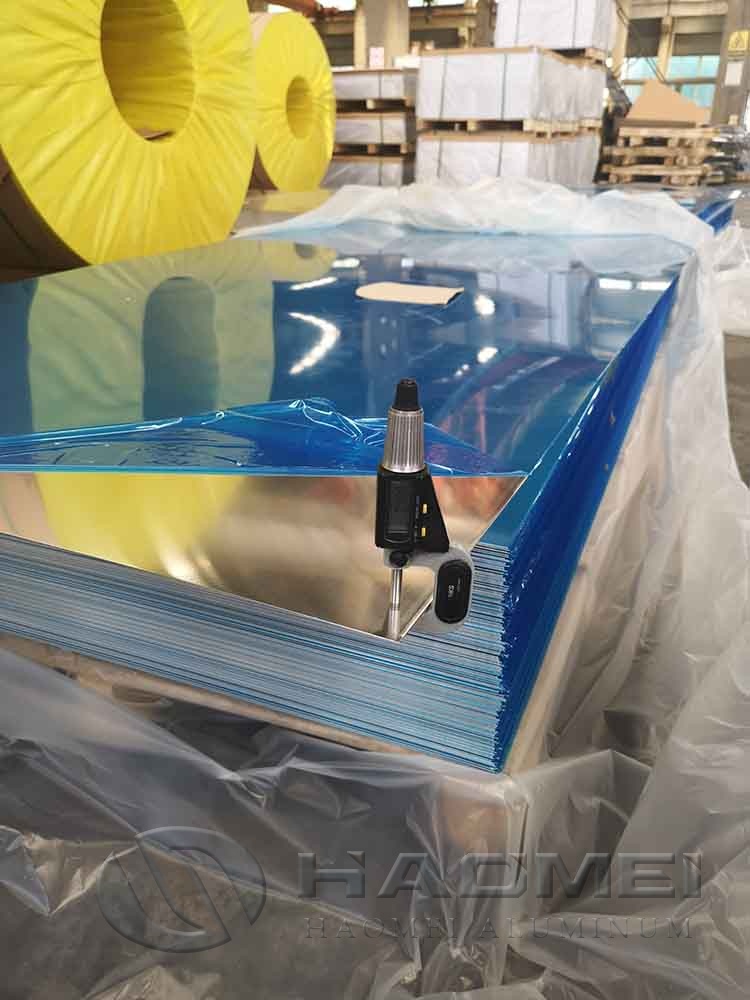
The designation 1060 identifies the chemical composition, while the temper identifies the condition after processing. A correct order must specify both. "1060" alone does not define hardness, bend behavior, flatness, surface condition, or dimensional tolerances.
| Item | 1060 Aluminum | Practical Purchasing Impact |
|---|---|---|
| Minimum aluminum content | 99.60% | Supports high conductivity and good corrosion resistance |
| Density | Approx. 2.70 g/cm³ | Useful for freight-weight and part-weight calculations |
| Strength level | Low to moderate, temper-dependent | Verify if parts must resist deformation |
| Formability | Excellent in O temper | Suitable for deep drawing, spinning, and complex bending |
| Weldability | Good by conventional fusion methods | Confirm weld procedure when appearance matters |
| Corrosion resistance | Good in normal atmospheric conditions | Protect from alkaline chemicals and galvanic contact |
| Temper | Condition | Best-fit applications | Main risk to control |
|---|---|---|---|
| O | Fully annealed | Deep drawing, spinning, embossed panels | Handling dents and deformation |
| H12 / H14 | Strain hardened | General fabrication, signs, reflector components | Springback during bending |
| H16 / H18 | Harder strain-hardened material | Flat components needing improved dent resistance | Cracking on tight-radius bends |
For deep-drawn parts, specify O temper and define the required grain direction, lubricant compatibility, and surface condition. For laser-cut panels, H14 is often a practical balance between rigidity and workability, but the required flatness after cutting must be stated separately.
A common error is substituting a higher-hardness temper to improve handling resistance. This can raise forming force, increase springback, and cause edge cracking. First confirm the minimum bend radius and forming depth with the fabricator.
For protected surfaces, a PE-film product such as Factory Customized Aluminium Aluminum Plain Flat Plate with PE Film One Side can reduce scratches during cutting and assembly. Confirm film thickness, adhesion level, UV exposure limit, and removal temperature before production release.
Specify the governing standard in the purchase order rather than relying on a generic mill certificate. ASTM B209 covers aluminum and aluminum-alloy plate and sheet. EN 485 addresses tolerances and mechanical properties for aluminum and aluminum alloy products in Europe. In China, GB/T 3880 is commonly used for aluminum and aluminum-alloy plate and strip products, while GB/T 3190 covers chemical composition.
A specification should state the material standard, temper, dimensions, tolerance class, surface finish, protective-film requirement, inspection method, packaging, and certificate type.
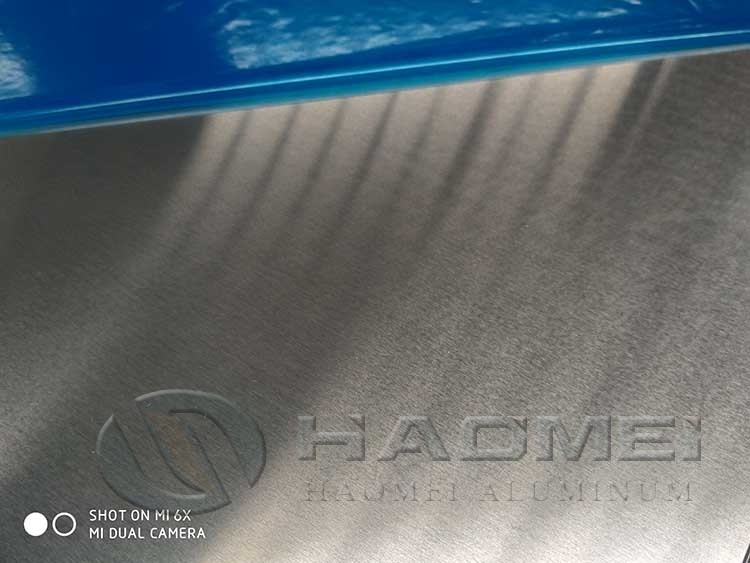
Flatness should be treated as the top technical concern for panel fabrication. A plate can meet thickness tolerance while still causing distortion in punching, laser cutting, laminating, or automated feeding. Ask whether the material is supplied as leveled cut length, and confirm whether the stated flatness applies before or after film application.
For electronics and heat-spreading panels, a product specified as Refrigerator Heat Sink Ultra Flat Aluminum Sheet may be relevant where planarity and heat transfer are more important than structural strength. Validate alloy and temper independently against the drawing because "ultra flat" is a commercial description, not a universal standards classification.
The cost of 1060 material is usually built from the exchange-traded primary aluminum reference, regional premium, conversion charge, processing, packaging, and freight. The London Metal Exchange publishes aluminum reference prices, but the physical transaction price also depends on location, delivery terms, currency, payment terms, and conversion capacity.
| Cost Driver | Why It Changes | Control Action |
|---|---|---|
| Primary aluminum price | Global supply, energy costs, inventories, macroeconomic demand | Agree a pricing formula and index date |
| Conversion charge | Thickness, width, temper, leveling, cut-to-length work | Separate metal price from fabrication charge |
| Scrap yield | Narrow widths and custom blanks create trim loss | Confirm chargeable weight and yield basis |
| Protective film | Film grade, width, adhesion, application speed | Specify one-side or two-side coverage |
| Freight and packaging | Weight, palletization, export route, insurance | Define Incoterms and maximum package weight |
| Lead time | Rolling-mill schedule and finishing capacity | Reserve production slots for repeat releases |
Avoid comparing offers only by price per metric ton. One offer may use theoretical weight, while another invoices actual scale weight. A lower conversion charge can also conceal looser thickness tolerance, unprotected surfaces, or a reduced inspection scope.
For repeat demand, use a pricing mechanism that separates aluminum metal exposure from conversion. Define the published index, averaging period, currency, premium basis, and adjustment trigger. This makes price changes auditable and avoids disputes caused by a market move between quotation and shipment.
Supply planning should account for the aluminum market cycle. High energy prices can affect smelter output and primary-metal availability. Strong demand from transport, packaging, construction, and power transmission can tighten rolling capacity. Conversely, weak industrial demand may reduce lead times but does not automatically reduce conversion charges for narrow-width or precision-leveled material.
Before approving a production lot, inspect representative pieces for thickness, width, length, diagonal, flatness, surface damage, protective-film adhesion, and edge condition. Retain photographs, scale records, and the mill test certificate with the receiving report. These records make nonconformance claims traceable to the agreed specification rather than subjective appearance expectations.
With the development of dozens of years, we, Haomei Aluminum has solid base to provide clean aluminum material for the high-end applications including lithium-ion battery, lightweight automobile body, 3c products, aluminum brazing and other special uses.